

Where we fight
Nine ways injuries happen.
Same Louisville firm handles every case.
Our fee starts at 25%. Insurance-defense playbook turned against them. No kitchen-sink marketing.
All practice areas- 01 Automobile Accidents From I-264 to the Watterson.
- 02 Tractor Trailer Accidents We know the playbook.
- 03 Motorcycle Accidents The bias isn't luck. It's avoidable.
- 04 Premises Liability Their floor. Their fault.
- 05 Estate Planning & Probate Wills, trusts, probate - led by Rob Walker.
- 06 Workers' Compensation Few firms advertise it. Unions find us here.
- 07 Nursing Home Negligence Their care. Your loved one. Our fight.
- 08 Defective Products Designed to fail. Built to lose.
- 09 Dog Bites Owners are responsible. Period.
Locally rooted
Standing with Louisville's labor unions for three generations.
Tony's father and grandfather were card-carrying members. We know the contracts, the comp boards, and the third-party claim playbook.
All unionsGuides for Kentucky claims
Plain-English answers before you call an insurer.
Comparative fault, PIP, UM/UIM, rideshare, and pedestrian claims - written for Louisville families.
- 01 Comparative Fault in Kentucky How fault is shared after a wreck.
- 02 PIP / No-Fault Benefits What Kentucky PIP covers, and what it doesn't.
- 03 UM / UIM Claims When the other driver has too little insurance.
- 04 Uber and Lyft Accidents Rideshare claims in Louisville.
- 05 Pedestrian Accidents Crosswalk and sidewalk injury claims.
Call your law firm.

Rideshare Accidents · Louisville, KY
Uber and Lyft Accidents in Louisville: Insurance Layers Explained
Hurt in an Uber or Lyft crash in Louisville? Our guide explains Kentucky's TNC insurance layers, app periods, and your rights. Free case review.
01 · The short answer
Rideshare Accidents in plain English.
If you are injured in an Uber or Lyft accident in Louisville, the available insurance coverage depends on the driver's status in the app at the time of the crash. Kentucky law sets specific, multi-layered insurance requirements for rideshare companies for different periods of operation, which are separate from the driver's personal auto policy. Understanding which period the driver was in is critical to identifying the correct insurance policy and its limits.
Transportation Network Company (TNC): A Transportation Network Company, or TNC, is a company like Uber or Lyft that uses a digital network or mobile app to connect passengers with drivers who use their own personal vehicles to provide prearranged rides. Kentucky law regulates these companies and their insurance obligations separately from traditional taxi services.
Updated October 14, 2026. Kentucky law.
02 · Rideshare Accidents guide
How does insurance work in a Louisville Uber or Lyft accident?
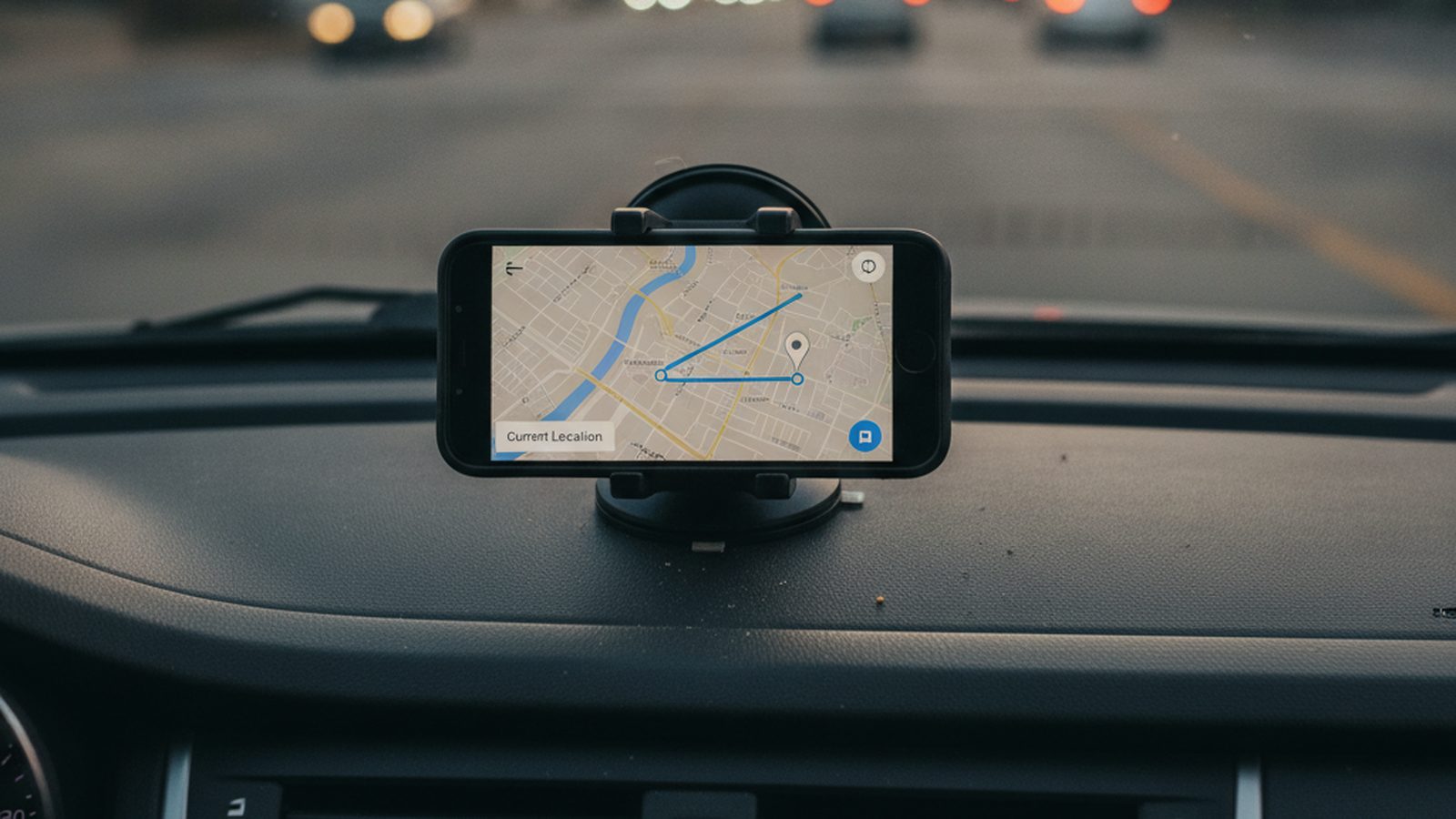
An accident involving a rideshare vehicle is more complex than a typical car wreck. Instead of just two personal auto policies, a crash with an Uber or Lyft driver can involve the driver’s personal insurance and up to two different tiers of commercial insurance provided by the TNC. The key is determining the driver's status at the exact moment of the crash.
Kentucky law, specifically KRS 281.655, establishes the insurance rules for TNCs. These rules create distinct “periods” of operation, each with its own minimum insurance requirement. If a TNC driver causes an accident, the available coverage depends entirely on which period they were in.
The Three Periods of TNC Insurance Coverage in Kentucky
Insurance adjusters for rideshare companies focus heavily on the driver's app status. The evidence you preserve at the scene, like screenshots of your trip in the app, can be crucial in establishing which insurance policy applies. Here are the periods and the minimum liability coverages required by Kentucky law:
| Driver's Status (App Period) | Minimum Required Liability Coverage |
|---|---|
| Period 1: App On, Waiting for a Ride Request |
|
| Period 2 & 3: Ride Accepted or In Progress |
|
| App Off: Driver is Offline | The driver's personal auto insurance policy applies. The TNC's commercial insurance does not. |
It is important to note that a driver's personal auto insurance policy may contain an exclusion for commercial driving. If the driver was in Period 1, their personal insurer might deny the claim, making the TNC's contingent policy the primary source of recovery. Our experience defending insurance companies means we know how to investigate these coverage layers and prevent a carrier from wrongfully denying a claim by pointing fingers at another policy.
This page is for informational purposes and is not legal advice. Case outcomes depend on the specific facts, and deadlines to file a claim can vary significantly.
“If you are injured in an Uber or Lyft accident in Louisville, the available insurance coverage depends on the driver's status in the app at the time of the crash.”
Colyer Law Firm · Louisville
03 · Rideshare Accidents guide
What are the first steps after a rideshare crash in Louisville?
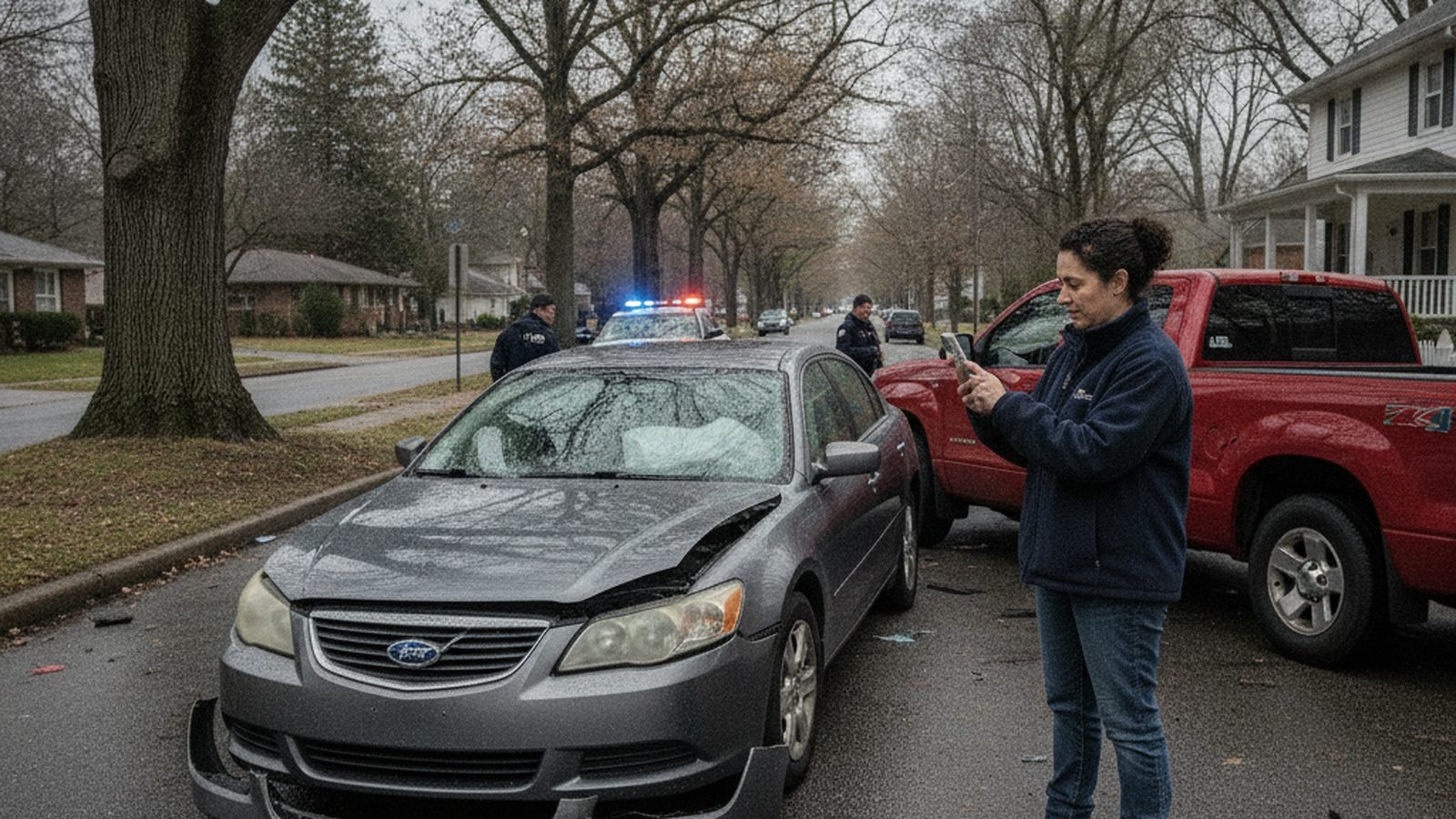
The moments after any car accident are disorienting. When a rideshare vehicle is involved, the need to document the situation is even more critical because the driver's digital status can become a point of contention. Taking clear, immediate steps can protect your health and any potential claim.
This information applies to accidents occurring in Louisville and throughout the Commonwealth of Kentucky.
- Ensure Safety and Call 911: Your first priority is health. Move to a safe location if possible, check on others involved, and call 911 to request police and emergency medical services. A police report creates an official record of the incident.
- Document the Scene Thoroughly: Use your phone to take pictures and videos of everything. This includes damage to all vehicles, license plates, the positions of the cars, skid marks, and any relevant traffic signs or signals. Specifically, photograph the Uber or Lyft sticker on the vehicle.
- Capture App and Driver Information: If you are a passenger, take screenshots of your app screen. Capture the driver’s name and photo, the vehicle information, the trip map, and the ride status. If you are another motorist, ask the driver which service they work for. Save your trip receipt from your email.
- Exchange Information: Get the rideshare driver’s name, contact information, and personal auto insurance details. Also get contact and insurance information from any other drivers involved. Crucially, ask any witnesses for their names and phone numbers. Independent witness testimony can be invaluable.
- Seek Medical Attention: Even if you feel fine, get a medical evaluation. Some serious injuries, like whiplash or concussions, have delayed symptoms. An ER or urgent care visit creates a medical record that links your injuries to the date of the crash.
- Avoid Recorded Statements: The TNC's insurance company may call you quickly and ask for a recorded statement. You are not obligated to provide one. These statements are often used to find inconsistencies in your story or to get you to downplay your injuries. It is wise to consult with an attorney before speaking to any insurance adjuster.
Preserving this evidence helps establish the facts, including the critical detail of which insurance period the TNC driver was operating in. We often send immediate preservation letters to TNCs to ensure they do not delete trip data, driver logs, or other electronic evidence relevant to the case.
04 · Rideshare Accidents guide
Who is financially responsible for my injuries?

In a Louisville rideshare accident, determining who pays for your damages involves identifying all at-fault parties and understanding Kentucky's specific liability laws. Financial responsibility is not always limited to a single driver or insurance policy; it can be shared among several parties.
Potential liable parties could include:
How Kentucky's Pure Comparative Fault Rule Affects Your Claim
Kentucky law follows a “pure comparative fault” system, as outlined in KRS 411.182. This rule is a critical factor in any personal injury case. In plain language, it means you can recover damages even if you were partially to blame for the accident.
Here is how it works: a jury or the parties in a settlement negotiation will assign a percentage of fault to everyone involved. Your total compensation is then reduced by your percentage of fault. For example, if you have $100,000 in damages but are found to be 20% at fault, you can still recover $80,000. Unlike in many other states, there is no cutoff; even if you are found 90% at fault, you can theoretically recover 10% of your damages.
Insurance companies are experts at using this rule to their advantage. They will investigate every angle to shift as much blame as possible onto you to reduce their payout. An experienced attorney can build a strong case with evidence to counter these tactics and ensure the fault is assigned fairly.
- 01
The TNC Driver
If the rideshare driver's negligence caused the crash, such as speeding, distracted driving, or running a red light, they are at fault. Their personal or the TNC's commercial insurance would be the source of recovery, depending on their app status.
- 02
The Transportation Network Company (Uber or Lyft)
While TNCs classify drivers as independent contractors, their commercial insurance policies are required by law to cover accidents that occur during specific periods of operation. In some cases, a TNC could also be held liable for negligent hiring if they failed to conduct a proper background check on a driver.
- 03
Another Motorist
If a different driver hit the Uber or Lyft you were riding in, or caused the TNC driver to crash, that third party driver and their insurance company are the primary target for your claim.
05 · Step by step
What compensation can I recover after a TNC accident in Kentucky?

If you have been injured in an Uber or Lyft accident due to someone else's negligence, you may be entitled to recover compensation for a wide range of losses. The goal of a personal injury claim is to make you whole again, financially, by covering both your economic and non-economic damages. The outcome of any case always depends on the specific facts, the severity of the injuries, and the available insurance coverage.
- 01
Starting with No-Fault (PIP) Benefits
Kentucky is a “choice no-fault” state, which means that regardless of who caused the accident, your own auto insurance policy’s Personal Injury Protection (PIP) benefits are typically the first source of payment for medical bills and lost wages, up to $10,000. This system, governed by the Kentucky Motor Vehicle Reparations Act (KRS Chapter 304, Subtitle 39), is designed to get you immediate medical benefits without waiting for a fault determination. If you are a passenger in a rideshare vehicle during an active ride, the TNC's insurance policy may be required to provide primary PIP coverage.
You can pursue a claim against the at-fault party for further damages once your injuries meet a certain threshold, such as having more than $1,000 in medical expenses, a broken bone, or a permanent injury.
- 02
Types of Damages in a Liability Claim
Once you meet the threshold to step outside the no-fault system, you can seek compensation for all your losses from the at-fault party. These damages may include:
- Medical Expenses: All costs related to your treatment, including ER visits, hospital stays, surgery, physical therapy, medication, and any anticipated future medical care.
- Lost Wages: Compensation for the income you lost while unable to work during your recovery.
- Loss of Future Earning Capacity: If your injuries permanently affect your ability to do your job or earn the same level of income as before, you can seek damages for this loss.
- Pain and Suffering: Compensation for the physical pain, emotional distress, and mental anguish caused by the accident and your injuries.
- Property Damage: The cost to repair or replace your vehicle and any other personal property damaged in the crash.
At Colyer Law Firm, we work to document every category of your damages to build a comprehensive demand for the insurance company. Our fee structure, which starts at 25%, ensures that more of the recovery stays with you, the injured person.
06 · Common questions
Rideshare Accidents -
straight answers.
How long do I have to file a lawsuit for an Uber accident in Louisville?
For most motor vehicle accidents in Kentucky, you generally have two years from the date of the crash or the date of the last Personal Injury Protection (PIP) payment, whichever is later, to file a lawsuit. This is governed by KRS 304.39-230. However, deadlines can vary, so it is crucial to consult an attorney to confirm the exact statute of limitations for your specific case.
This is general information, not legal advice.
What happens if the Lyft driver who hit me was not on a trip?
If the Lyft driver was logged into the app and waiting for a ride request, a lower tier of TNC insurance applies, typically with liability limits of $50,000 per person, $100,000 per accident, and $25,000 for property damage. If the driver's app was completely off, their personal auto insurance is the only applicable coverage, and the TNC's insurance does not apply.
This is general information, not legal advice.
Can I get compensation if the at-fault Uber driver is uninsured or underinsured?
Yes. Kentucky law requires TNCs to carry uninsured motorist (UM) and underinsured motorist (UIM) coverage on their policies that are active during a prearranged ride. Additionally, you may be able to make a claim against the UM/UIM coverage on your own personal auto policy.
This is general information, not legal advice.
Do I need a lawyer for a rideshare accident claim?
While not required, hiring an experienced attorney is highly advisable. TNC accident claims involve complex insurance layers, corporate defendants, and specific state laws. An attorney can investigate the driver's status, preserve evidence, handle communication with multiple insurance companies, and fight to maximize your compensation.
This is general information, not legal advice.
Does my own car insurance cover me as a passenger in an Uber?
Your own Personal Injury Protection (PIP) benefits may provide initial coverage for medical bills, even as a passenger in an Uber. Your health insurance can also be used. For liability, you would first make a claim against the at-fault driver's applicable insurance, which could be the TNC's large commercial policy.
This is general information, not legal advice.
What if my rideshare driver gets into an accident but another driver was at fault?
If another driver caused the crash, their auto liability insurance is the primary source for your compensation claim. You would file a claim against that driver's policy. The TNC's underinsured motorist (UIM) coverage could also apply if the at-fault driver's insurance is not enough to cover all of your damages.
This is general information, not legal advice.
Don’t see your question? More on the FAQ page, or just ask us directly.
Free case review
Still have questions? Ask a lawyer.
Tell us what happened. We will explain where you stand, what deadlines apply and what your claim may be worth. No fee unless we win.
Educational only, not legal advice. Reading this page does not create an attorney-client relationship. Kentucky deadlines and rules depend on your facts. Contact a licensed Kentucky attorney about your situation.
Rideshare Accidents · Louisville, KY
Hurt and not sure what’s next?
Let's start the file.
Free case review, no fee unless we win. Our fee starts at 25%. Same-day callback from our team.