

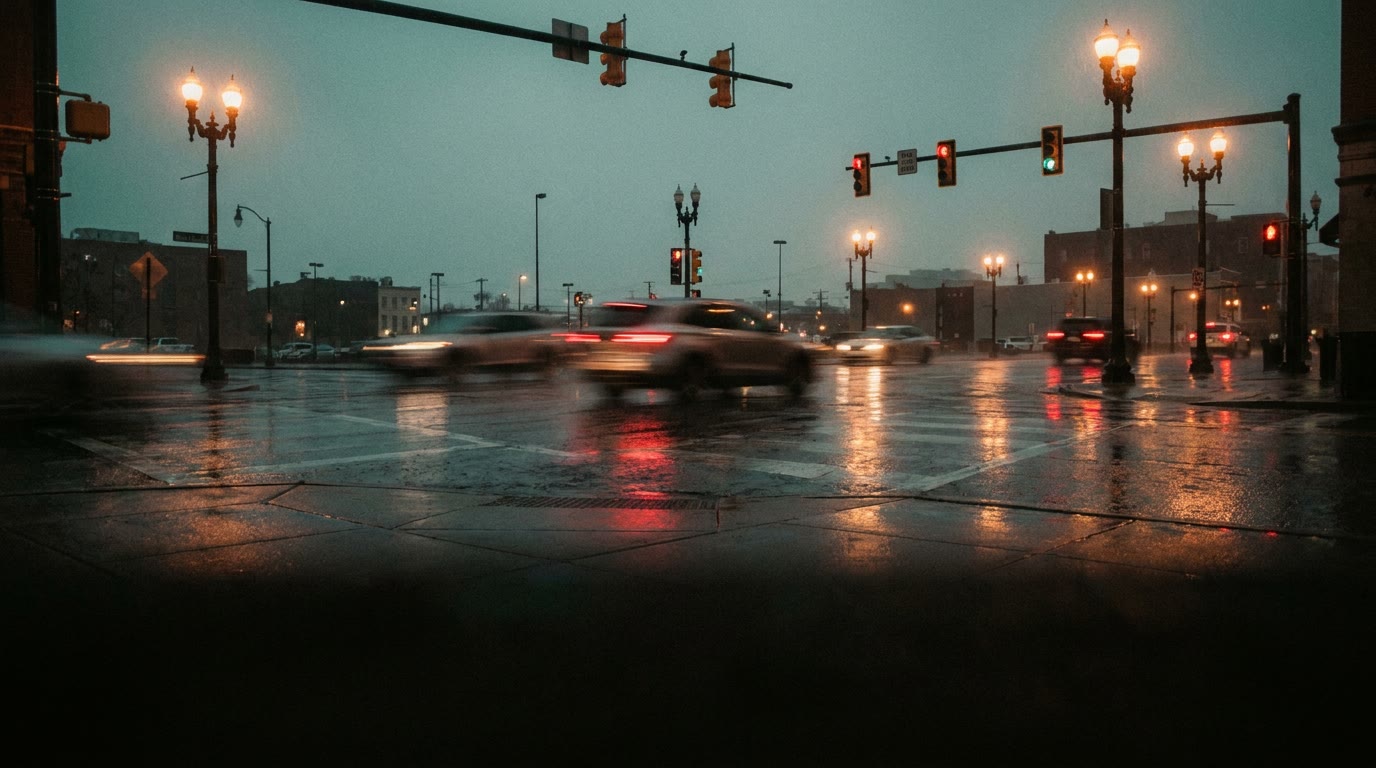
Auto accidents · Louisville, KY
Hit on I-264.
Rear-ended on
Dixie Highway.
The fight starts now.
Every Louisville driver knows the bottlenecks - Spaghetti Junction, the Watterson, Shelbyville Road at rush, and Dixie Highway - one of the city's most crash-heavy corridors, running right past our Shively office. When a crash takes you out of your routine, your job, and your treatment becomes a full-time problem, we handle the insurance side so you can focus on getting better.
01 · The problem
The carrier's first call isn't to help you.
It's to contain the file.
Inside 48 hours of the wreck, the at-fault driver's insurance company will call. They'll be friendly. They'll ask for a quick recorded statement - “just to get your side.” They'll float a number - usually low four figures - to close it out fast.
What's actually happening: the adjuster has a coverage limit, a reserve already set, and an internal incentive to close the file under that reserve. Your statement isn't being recorded to help you - it's being recorded so a defense attorney can use it 18 months later if the case goes to litigation.
We file fast, paper the record, walk with you through your medical recovery, and treat that first offer like the opening bid it is. Most of our auto cases settle for a multiple of what the carrier initially proposed.

02 · Defense playbook, decoded
What the carrier does.
What we do back.
- Their tacticQuick recorded statement
- Our counterWe don't let clients give one. If anyone is recording, it's us recording our own client - on our terms, with prep.
- Their tacticProperty damage settled first, separately
- Our counterWe coordinate the property-damage check with the bodily-injury claim so the adjuster can't use one to anchor the other.
- Their tactic“Medical bills only” offer
- Our counterMedical bills are one column of damages. Lost wages, pain, scarring, mental, and household services are the other columns - we build all of them.
- Their tacticPre-existing condition argument
- Our counterWe pull prior records ourselves and let the treating physician draw the line between baseline and the wreck. The eggshell plaintiff rule is on our side.
03 · How we handle it
Step by step.
No mystery, no padding.
- 01
Same-day intake.
You call, we listen, we ask the right questions in the first 20 minutes. If we can't help, we say so - and point you to who can.
- 02
Evidence preservation.
Police report pulled, photos secured, witnesses contacted, scene visited if needed. Vehicle preserved before salvage if it's still drivable evidence.
- 03
Medical coordination.
We don't pick your doctor - but we make sure your treatment is documented, consistent, and tied to the wreck on paper. No gaps in records is the game.
- 04
Demand + negotiate.
Full demand package built around the medical record, lost wages, and our valuation of intangibles. Most cases settle in this phase.
- 05
File suit if the carrier won't move.
We litigate. Years inside insurance defense (2009-2014) mean we know what they're afraid of in deposition.
- 06
Trial if it has to be.
Less than 5% of files go this far - but the ones that do are the ones where the carrier underestimated us. We don't bluff.
04 · Where it shows up
Automobile Accidents -
six common shapes.
Auto accidents aren't one thing. Each sub-type triggers different coverage, different deadlines, and different defense tactics.
- 01
Rear-end collisions
Almost always the trailing driver's fault - but the carrier will still try to argue your stopping was “sudden.”
- 02
T-bone / intersection
Light disputes, right-of-way disputes, dash-cam disputes. Witnesses matter here more than anywhere else.
- 03
Hit and run
Triggers your own UM (uninsured motorist) coverage. Many drivers don't know they're covered.
- 04
Uber / Lyft / rideshare
Three different policies stack depending on driver status. We map which one applies before we make a demand.
- 05
Uninsured / underinsured
Kentucky law lets you stack your own UM/UIM coverage on top of the at-fault driver's. Most adjusters won't volunteer this.
- 06
Pedestrian / bicycle
Drivers' policies usually cover you even if you weren't in a car. Comparative fault is the main fight.
06 · Common questions
Automobile Accidents -
straight answers.
How much is my auto accident case worth?
It depends on medical specials, lost wages, recovery trajectory, and available insurance limits. We give you a real range after we pull the records and check coverage - not an inflated number just to get you in the door.
Should I talk to the other driver's insurance?
No. Not before you talk to us. The adjuster is friendly because that's the job - friendly gets statements. Statements get used against you later.
What if the other driver was uninsured?
Your own auto policy probably has UM (uninsured motorist) coverage built in. We make a claim against your own carrier - and yes, that's allowed, that's what you paid premiums for.
How long does an auto accident case take?
Most resolve in 6–14 months. Cases requiring surgery or litigation can run 18–24. Cases that settle inside 60 days usually settled for too little.
Don’t see your question? More on the FAQ page, or just ask us directly.

Auto accidents · Louisville, KY
Got hit?
Let's start the file.
Same-day callback from our team. Bring your police report, photos, and any insurance correspondence - we'll walk you through where you stand.